
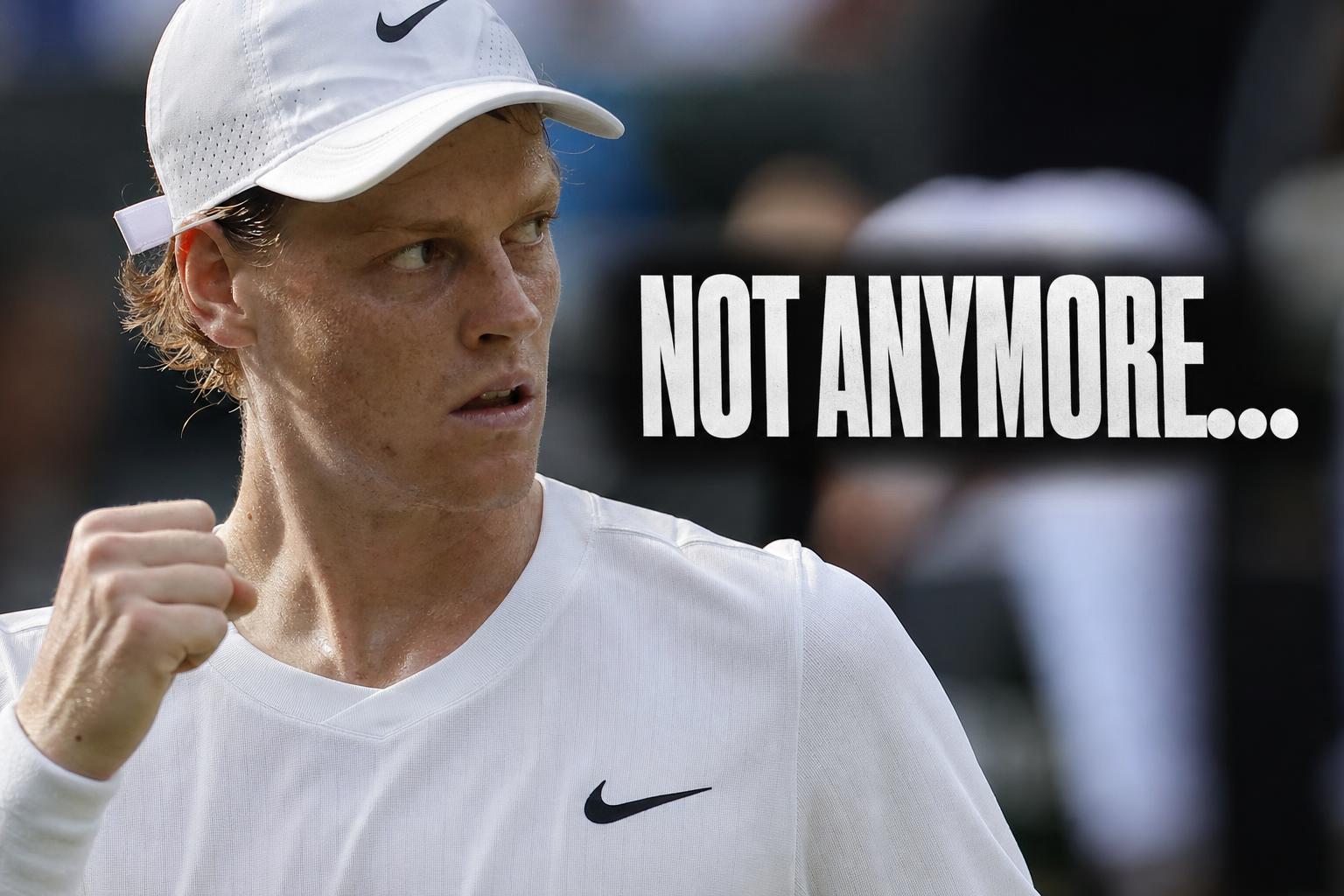
Sinner Refuses To Rule Out Grand Slam Boycott As Prize Money Fight Escalates
 By The Tennis Expert 4 min read
 Jannik Sinner did not close the door on a Grand Slam boycott this week, and the usual tennis instinct to pretend everything is fine took a forehand to the ribs. The world No. 1 said the majors have not answered player concerns with enough urgency, turning a prize money dispute into a broader argument about respect.
A Standoff Turning Into A Test Of Power
Sinner’s comments landed after Aryna Sabalenka suggested that players may eventually boycott Grand Slam tournaments, a view Coco Gauff also backed. That is not the sort of group chat the four majors were hoping to wake up to, but here we are.
The core issue is simple enough to explain and messy enough to resolve. Top players, both men and women, want a bigger share of tournament revenues, plus more cooperation and improved player welfare contributions. The argument is no longer just about money, it is about whether the sport’s biggest events actually listen.
Sinner said the top 10 men and women wrote a letter to the Grand Slams last March, asking for meetings on those issues. More than a year later, he said, the players are still waiting for something that looks like meaningful progress.
It’s more about respect, you know? Because I think we give much more than what we are getting back. It’s not only for the top players; it’s for all of us players.
He also drew a pointed comparison with other sports, saying elite athletes elsewhere would get a response within 48 hours. That was not exactly a love letter to tennis power brokers, and Sinner did not sound interested in softening the point for the benefit of anyone’s feelings.
Could A Boycott Actually Happen?
Sinner was careful not to promise a walkout, which is sensible because predicting the future in tennis usually ends with someone being wrong in expensive shoes. Still, he did not dismiss the idea either, and that matters.
He said he could understand other players not competing if it came to that, while adding that the moment for a stand may already be arriving. He also noted what feels increasingly true around the tour, that players are more united on this issue than usual.
That unity is important because the sport’s labor structure makes collective pressure difficult. Players are independent contractors, not unionized workers, which means the leverage is real in theory and complicated in practice. A full boycott of the Slams still sounds unlikely, but the fact that it is being discussed at all is telling.
Sinner said the current expectation is that Roland Garros would offer around 15 percent of revenue, while the players are aiming for 22 percent. That gap is not a rounding error, it is the kind of gap that generally keeps lawyers employed.
Djokovic Offers Support From The Sidelines
Novak Djokovic, who has spent years trying to strengthen player unity through the ATP Player Council and later the PTPA, said he is not part of the latest initiative but supports it. That is about as classic Djokovic as it gets, active in the background, measured in the foreground, and somehow still impossible to ignore.
Players know that they’ll always have my support, and that’s all.
Djokovic also praised Sabalenka’s willingness to lead on the issue, calling it true leadership. He said the new generations need to understand how tennis politics works and what must be done for everyone’s benefit, not just the star names.
That point echoes the broader tension in the dispute. Sinner made clear that this is not only about the top of the rankings, even if top-ranked players are the ones with the loudest microphones and the cleanest sponsor polos. The whole ladder of players, from headliners to those grinding through early rounds, has a stake in the outcome.
What Happens Next
The majors now face a familiar but uncomfortable choice, engage seriously or keep waiting for the temperature to rise further. Wimbledon and the US Open are viewed as the next major checkpoints, and the players will be watching closely to see whether anything changes.
Sinner’s remarks do not guarantee a boycott, but they do mark a shift. When the world No. 1 starts sounding less theoretical and more fed up, the sport’s administrators can probably stop pretending this is just another routine calendar debate.
For now, the showdown remains a negotiation, not a strike. But with top players aligned, patience thinning, and the word disrespect hanging over the whole discussion, the Grand Slams have managed to produce the one thing nobody ever wants at the start of the clay season, a labor fight with center-court visibility.
Related Articles
Sinner’s Rome Surge Puts Nadal And Djokovic Records In His Crosshairs
Jannik Sinner keeps rolling at the Italian Open, reaching the Rome semifinals while chasing Nadal- and Djokovic-linked milestones that now look uncomfortably realistic.
Gauff Survives Rome Scare Again, and Her Nerves Are Still Working Overtime
Coco Gauff battled past Mirra Andreeva in another tense Rome thriller, then admitted the heavy balls and short length were making life miserable on clay.
Swiatek Powers Past Pegula In Rome To Hit First Semifinal Of 2026
Iga Swiatek looked sharp in Rome, crushing Jessica Pegula 6-1, 6-2 to reach her first semifinal of the 2026 season and send a Roland Garros reminder.