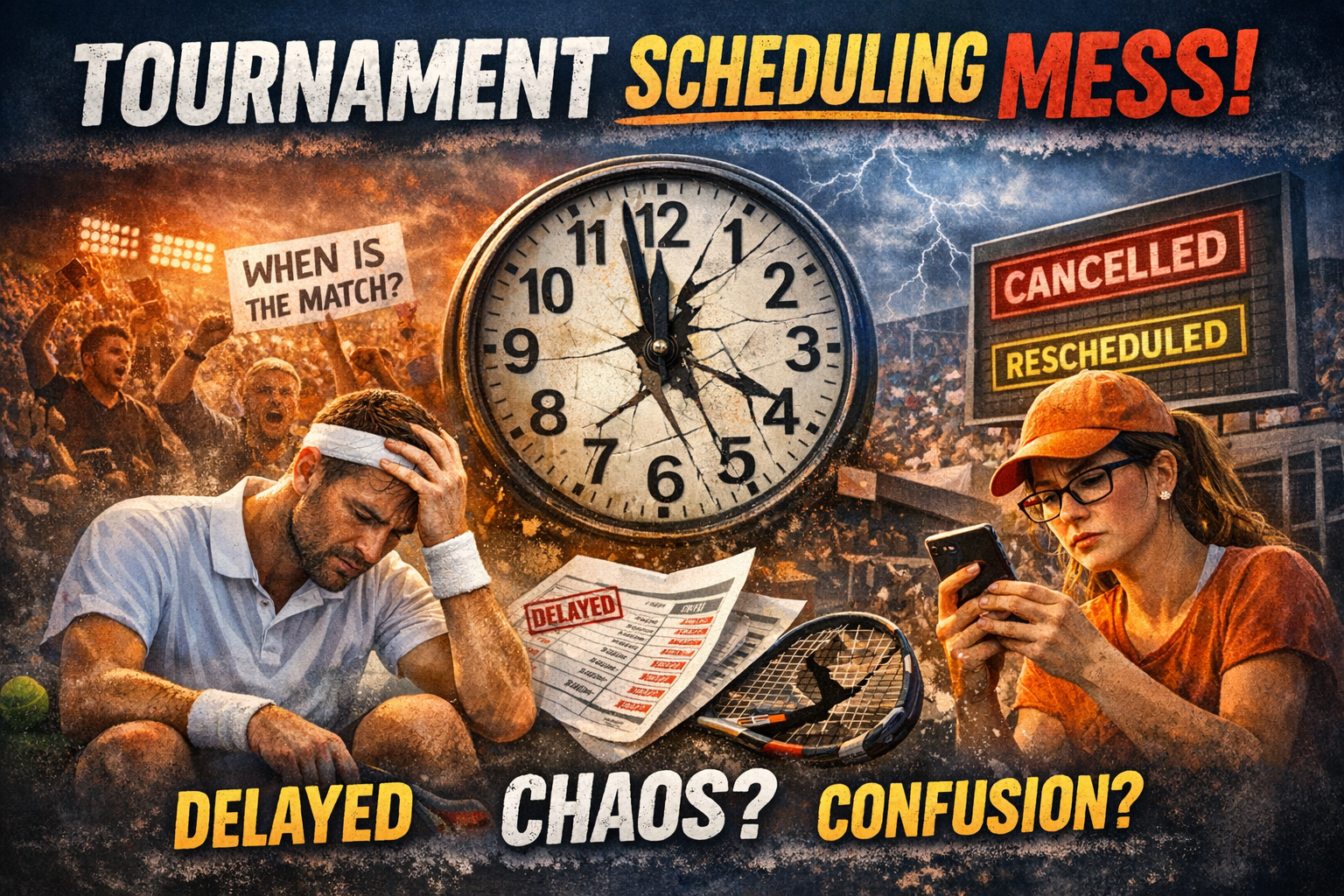
Another week, another scheduling meltdown that left courts empty at midnight and fans wondering when the tennis started and when it might actually end.
Across multiple events this season a tangle of late finishes, compressed windows and last minute changes landed everyone from top players to television producers in a logistical jam that felt equal parts avoidable and predictable.
Tournament Chaos: Schedule Snafus And Fan Frustration

My Tennis Expert believes tournaments need clearer scheduling, consistent player input and better communication to avoid late-night chaos and fan frustration.
My Tennis Expert
The immediate picture is messy but familiar: rain delays, matches running long and organizers juggling court assignments while broadcasters call for live action on tight windows. The ripple effects hit ticket holders, on-site staff and players who expect at least basic predictability in their day.
Players complained about late finishes that disrupted recovery and preparation routines, and those comments echoed across social feeds even if organizers resisted full blame. When a schedule stretches, training cycles, warm ups and mental routines feel like they are being negotiated in real time rather than managed ahead of time.
Broadcasters pushed for marquee matchups in prime slots and that pressure often collided with on-court reality, creating a tug of war between what fans wanted to see live and what was actually possible. That conflict left broadcasters making snap decisions and viewers changing the channel out of frustration.
What Players And Organizers Said
Organizers acknowledged challenges, citing compressed calendars and the need to protect competitive integrity, but stopped short of promising sweeping operational changes. The message from tournament offices was that some disruptions are unavoidable, even if the optics make those disruptions seem unacceptable to paying fans.
For players the issue is practical: too many late matches reduce recovery time and increase injury risk, and that trade off becomes harder to accept as seasons lengthen. Many athletes asked for clearer rules about how and when matches move across courts and into night sessions.
Behind the scenes, scheduling teams face a three sided problem where players, broadcasters and ticketing commitments each demand priority. That triangle leaves little room for graceful compromises, especially when weather or other delays force the schedule to contract on short notice.
How Fans And Broadcasters Were Impacted
Ticket holders found themselves waiting longer than advertised, sometimes missing headliners as matches cascaded past posted start times. Fans who budget time around a nominal schedule ended up leaving early or missing key moments, and that erosion of trust is a serious reputational issue for events.
Television partners and streaming platforms felt the squeeze too, trying to sync international windows with matches that had no respect for prime time in every market. The result was choppy coverage, missed ad windows and a broadcast product that never quite matched the promise sold to viewers.
Long term, the friction between global broadcast demands and on the ground logistics will need better governance, or the sport will keep trading credibility for short term exposure. Fans notice when the show is disorganized and those impressions linger longer than a five set tiebreak.
Historically tournaments adapted through rule tweaks and tighter officiating, but recent seasons have shown that tweaks alone are not enough to manage an increasingly crowded calendar. The sport needs clearer protocols so that when plans change everyone knows the fallback and acceptance is faster.
My Tennis Expert recommends some straightforward fixes: publish contingency windows well in advance, involve player representatives in schedule decisions and build buffer slots into draws. Those changes cost time and coordination, but they are cheaper than the reputational damage of repeated late night chaos.
There are no simple answers, and some nights will always run long, but a culture that prioritizes predictable windows over last minute heroics would benefit players, fans and partners alike. Predictability is not glamour, but it is the backbone of a professional sport trying to grow responsibly.
For now expect more heated discussions between tournament directors and players, plus increasing pressure from broadcasters who need stable products. The conversation is public, the stakes are clear and adjustments will be watched closely in upcoming events.
Join the conversation on Facebook.

Christoph Friedrich is a German tennis player and coach currently residing in Oakland, California. He began his tennis journey at the age of eight and has since dedicated his life to the sport. After working as a tennis coach and hitting partner in New York City for eight years, Christoph decided to share his knowledge and experience with tennis players around the world by creating the My Tennis Expert blog. His goal is to make tennis education accessible to everyone and help players select the best equipment for their game, from racquets and strings to shoes and overgrips. Christoph's extensive research and expertise in tennis technology make him a valuable resource for players of all levels.