When Cristiano Ronaldo nods at Novak Djokovic, you listen.
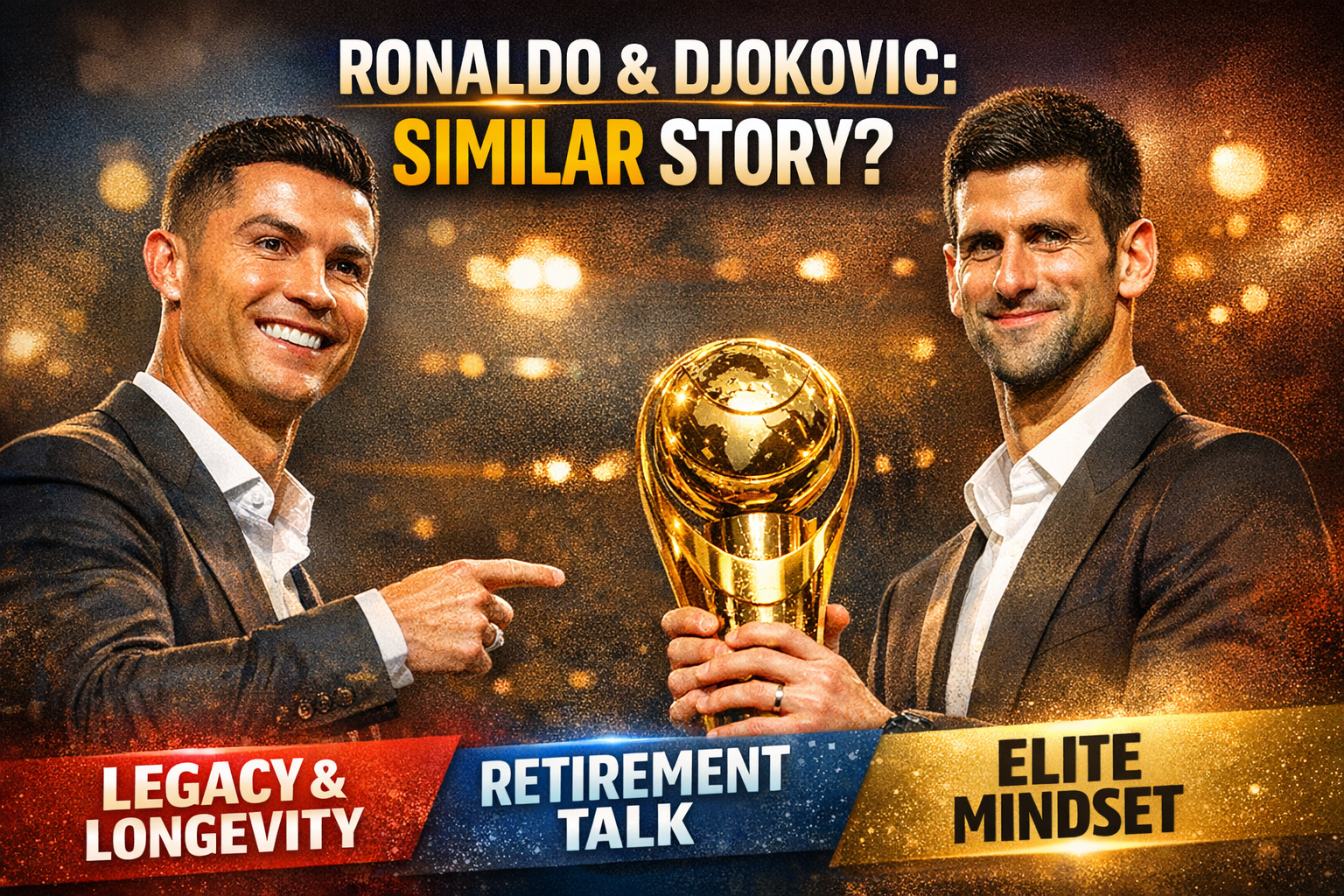
At the 16th Global Soccer Awards in Dubai, Ronaldo presented Djokovic with the Globe Sports Award and offered a rare cross-sport salute that resonated beyond clubhouse chatter, a short, public curriculum on durability and craft that rewarded sustained excellence, not just headlines.
Ronaldo Compares Journeys With Djokovic

The exchange felt like a veteran-level handshake that doubles as a headline: Ronaldo handed Djokovic the trophy and praised a career that echoes his own in grit, reinvention, and the stubborn refusal to bow to age or expectation, even when narrative told a different story.
Ronaldo distilled the kinship into a line any coach would envy when he said, “We have a similar story,” a tidy summary of decades spent chasing perfection, adjusting technique, and politely ignoring the rumor mill that tracks every dip in form.
Both athletes have weathered eras of rivals, changing technology, and loud critics, and the mutual nod carried weight because it connects two careers built less on flash and more on relentless maintenance of standards, performance, and an almost stubborn daily grind.
Ronaldo’s own CV helps make the comparison stick: he edges toward the 1000-goal threshold, an almost mythic milestone, while Djokovic keeps stacking tennis achievements that complicate any tidy retirement timeline or simple historical ranking conversations.
Djokovic was named winner of the Globe Sports Award at that Dubai ceremony, with Ronaldo doing the honors, and the moment read like an acknowledgment that longevity can be its own trophy when careers continue to produce results and rewrite expectations season after season.
Why Ronaldo’s Praise Matters
Ronaldo framed Djokovic as a template of longevity and example-setting, saying the Serb deserved recognition for his body of work and for how he carries himself, which turns an awards ceremony into a short lesson plan on professional longevity and public leadership.
Ronaldo punctuated his remarks plainly, saying “So he deserves this,” and framed Djokovic as a model whose career will be instructive for present players and the generations to come, which lifted the applause above mere pageantry.
The numbers underline the point: Djokovic is a 24-time Grand Slam champion and a public figure whose continued success contradicts assumptions about age, and coverage noted the 38-year-old champion speaking candidly about career planning in a very public forum.
Djokovic On Retirement And The Court
When pressed about retirement at the World Sports Summit in Madinat Jumeirah, Djokovic gave the sort of answer that halves the moral panic about aging athletes: he said he loves the sport, loves competing, and intends to let performance and body health steer any decision to step away.
“I just keep going. I love hitting the tennis ball. And I love competing,” he said. “As long as you really feel like you’re playing on a high level and your body holds on, why not?”
Novak Djokovic
That answer matters precisely because Djokovic continues to win and to show form; words about loving competition are harder to dismiss when the results and recent trophies still arrive, making retirement discussion more complicated than a calendar age.
He was most recently active with a title at the ATP 250 in Athens, Greece, where he beat Lorenzo Musetti in the final, a timely reminder that match wins and weekend hardware still back the idea that he can keep competing at a high level.
The exchange with Ronaldo is more than a moment of mutual admiration; it is a public syllabus on how elite athletes manage careers, how credibility accrues when performance persists, and how cross-sport recognition can bolster a legacy beyond the stat sheet.
For younger athletes, watching Ronaldo and Djokovic trade respect is a lesson in vocational endurance: training smarter, tending to recovery, and redefining what prime looks like, rather than resigning to tidy timelines set by pundits and highlight reels.
Media loves neat narratives, but this one resists simplification: awards and applause help shape legacy, yet they are shorthand that hides the daily routines, coaching choices, and personal sacrifices necessary to sustain world-class performance over decades.
If nothing else, the night in Dubai gave fans a small cinematic beat — two giants acknowledging each other — and served as an oddly practical thesis about why durability, example-setting, and public respect matter as much as headline statistics.
Join the conversation on Facebook.

Christoph Friedrich is a German tennis player and coach currently residing in Oakland, California. He began his tennis journey at the age of eight and has since dedicated his life to the sport. After working as a tennis coach and hitting partner in New York City for eight years, Christoph decided to share his knowledge and experience with tennis players around the world by creating the My Tennis Expert blog. His goal is to make tennis education accessible to everyone and help players select the best equipment for their game, from racquets and strings to shoes and overgrips. Christoph's extensive research and expertise in tennis technology make him a valuable resource for players of all levels.