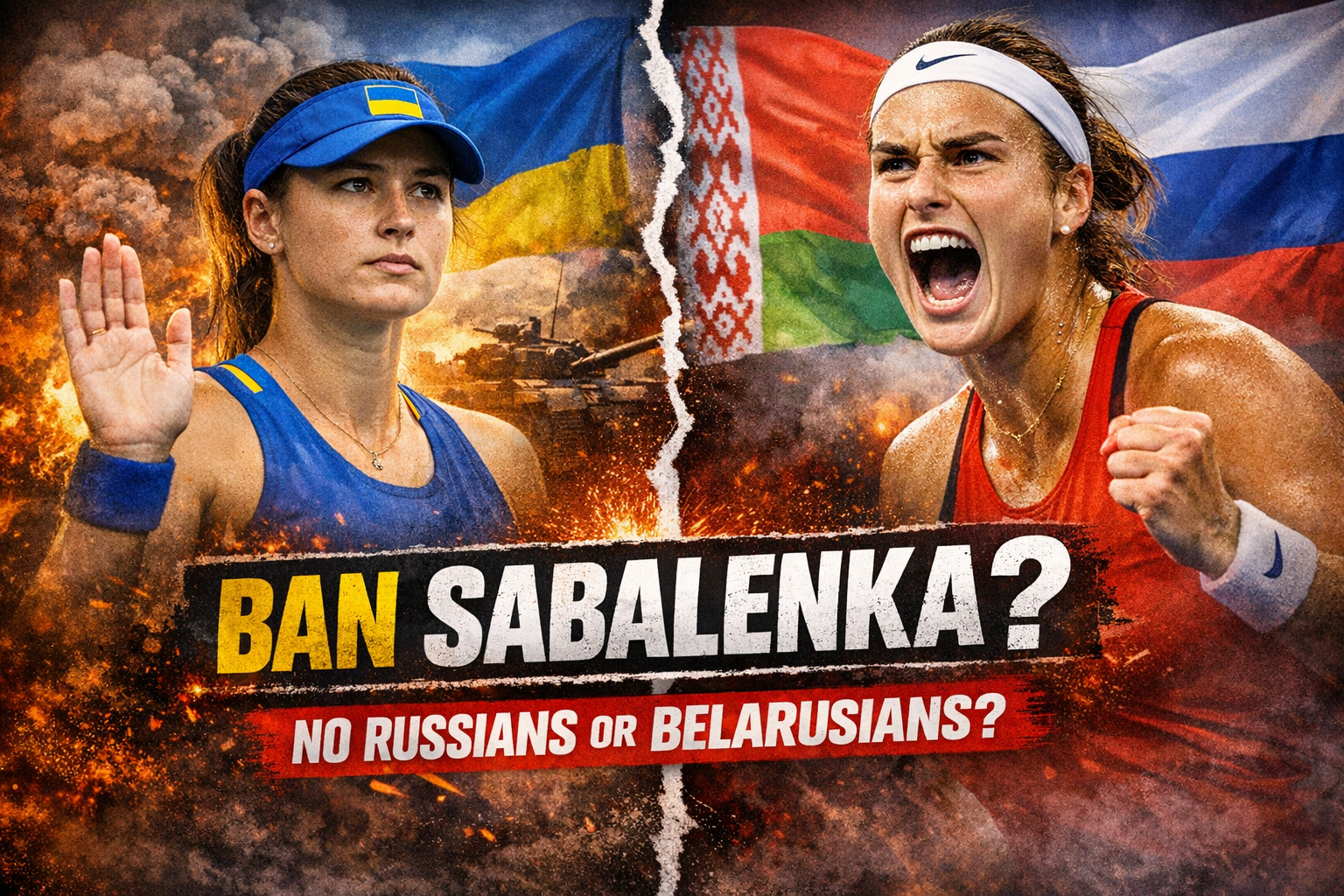
A Ukrainian WTA player has called for Aryna Sabalenka to be expelled from professional tennis.
At the Australian Open, Oleksandra Oliynykova used a postmatch platform to press a political case she says cannot be ignored, urging fans and governing bodies to scrutinize the public ties of Russian and Belarusian players amid the ongoing war in Ukraine.
Oliynykova’s Call For Bans

It’s their fault that my country and my people are suffering.
Oleksandra Oliynykova
Oliynykova, who is ranked world No. 92, did not mince words after her match, saying: “I strongly believe [Russian and Belarusian players] should be disqualified, like in other sports.” Her comments came with a plea for greater public scrutiny of athlete behavior.
She said concern was fading as the conflict continued and urged people to look more closely, telling reporters, “I think it’s very sad that people are losing attention because this is a long war; of course, they are not doing research.” Oliynykova wants that research done.
Oliynykova also accused some players directly of political support, saying, “If you research, you will find that many (Russian and Belarusian players) are supporting Putin or (Belarusian President Aleksandr) Lukashenko.” She framed the issue as moral and practical, not merely rhetorical.
She described a personal, frightening connection to the violence, saying, “Because of their opinions and the things they are doing, they are dangerous,” and adding that “These players are one of the reasons why my apartment was shaking before I came here.” She even wore a shirt demanding help for Ukrainian women and children.
On court Oliynykova pushed defending champion Madison Keys but ultimately lost 7-6(6), 6-1 in a match that amplified her voice and forced questions about where to draw the line between sport and state politics.
Sabalenka And Her Peers Respond
Aryna Sabalenka answered questions calmly, saying, “I want peace, and if I could change anything, I would definitely do that,” while also insisting, “I’m here for tennis. It’s a tennis event. I have said enough in the past and I just don’t want to talk politics here, thank you.”
Other players mentioned by Oliynykova replied in varying tones. Diana Shnaider said that playing in Russia allowed her to visit family, stating, “I rarely see my family, rarely being home, so my only motivation is to be playing in Saint Petersburg.” Daniil Medvedev said he respected Oliynykova’s views.
Tennis, Politics, And What Comes Next
The tennis world has already taken partial steps: Russian and Belarusian athletes have not represented their countries at ATP, WTA and Grand Slam events since the 2022 invasion, and Wimbledon’s 2022 ban led to the tournament losing ranking points as the tours pushed back.
Beyond the courts, the human cost keeps the debate charged. The Office of the United Nations High Commissioner for Human Rights reported 55,600 civilian casualties at the end of December 2025, a reminder that the stakes for some players are more than reputational.
The tour has seen gestures and defections in recent years: Andrey Rublev wrote “no war please” on a camera lens, Daria Kasatkina described the conflict as a “full-blown nightmare,” and a few players have switched nationalities or sought new passports amid mounting pressure.
Ukrainian peers like Elina Svitolina have consistently used their platforms to push for a full ban and to refuse traditional courtesies to players they view as representing hostile regimes, creating a persistent tension that surfaces match after match around the globe.
Tournament organizers and governing bodies now face a policy choice with no easy answer: preserve the principle of political neutrality in sport or take firmer action aligned with other sectors that have excluded representatives of those states from high-profile stages.
For Oliynykova the matter is urgent and personal, and her public stance at Melbourne is likely to keep the conversation alive in locker rooms, press conferences, and boardrooms as the WTA and ATP continue to balance fairness, safety, and public sentiment.
Expect more heat as players, media and fans weigh whether individual athletes should be judged for perceived political ties, and whether tennis will update its rules in response to what some competitors call unacceptable complicity.
Join the conversation on Facebook.

Christoph Friedrich is a German tennis player and coach currently residing in Oakland, California. He began his tennis journey at the age of eight and has since dedicated his life to the sport. After working as a tennis coach and hitting partner in New York City for eight years, Christoph decided to share his knowledge and experience with tennis players around the world by creating the My Tennis Expert blog. His goal is to make tennis education accessible to everyone and help players select the best equipment for their game, from racquets and strings to shoes and overgrips. Christoph's extensive research and expertise in tennis technology make him a valuable resource for players of all levels.