
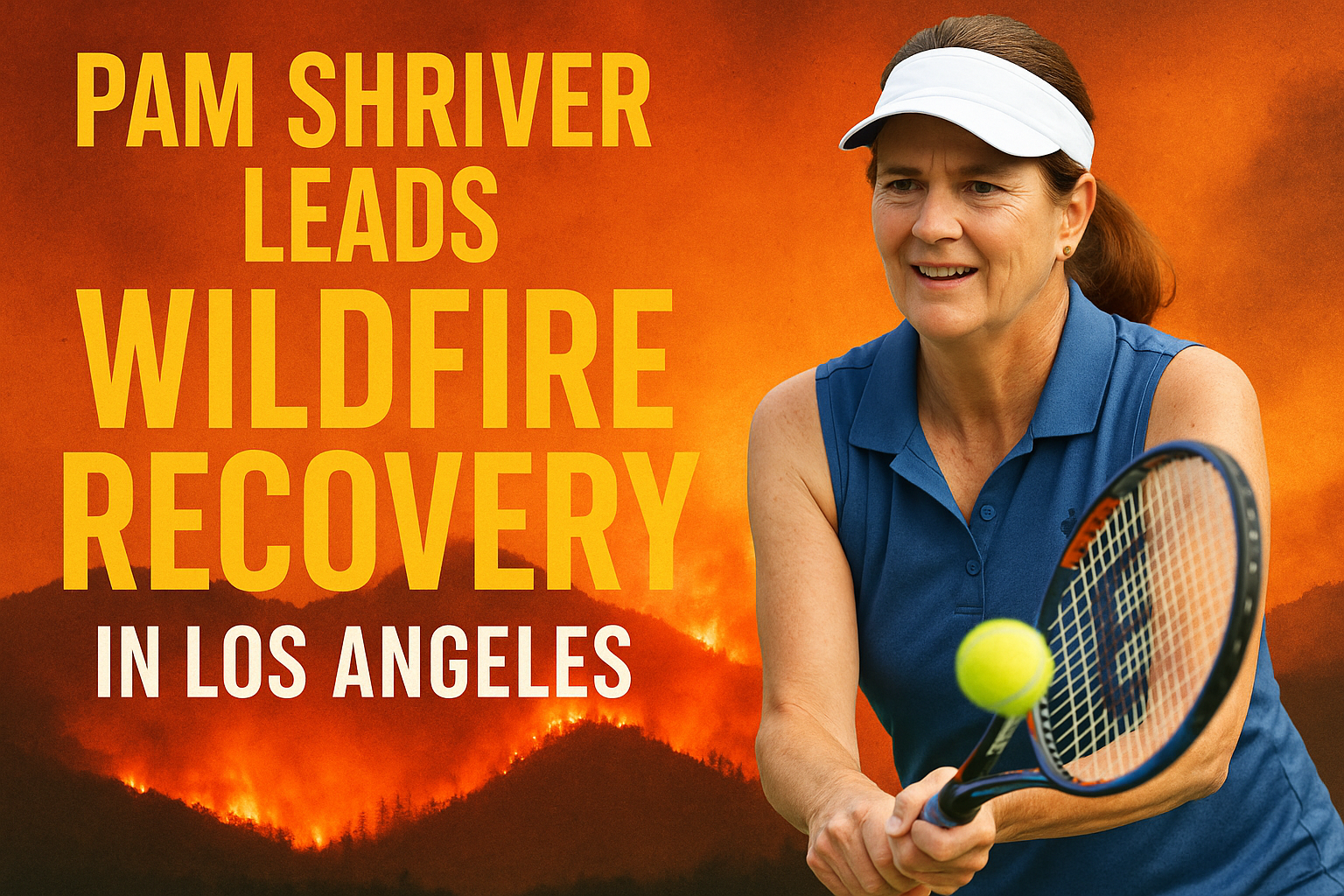
Pam Shriver has traded a few volleys for volunteerism, and the net result is a grassroots recovery plan for fire-hit Los Angeles neighborhoods.
Her nonprofit work with friend Ilise Friedman under the Village Rising banner is pushing repair funds out quickly, targeting schools and underused courts to reconnect communities in the Pacific Palisades and Altadena.
From serve-and-volley to service
Shriver’s tennis career was built on an aggressive serve-and-volley style, but these days her energy is focused on rebuilding public spaces after the apocalyptic wildfires that struck in January.
She and Friedman restarted Village Rising after a surge of support from friends worldwide, channeling that goodwill into immediate, on-the-ground fixes for parks and schools that were overlooked amid bigger recovery efforts.

“Tennis is unbelievable,” said Shriver. “It’s global, coed, equal … and we stand for things. That’s just perfect for this. Not just tennis, what happens on the actual courts, but the sport itself represents hope and resilience.”
Pam Shriver
Village Rising originally launched after the Woolsey Fire in 2018, and Friedman used her fundraising background to help people affected by that blaze and the 2019 Getty Fire before pausing operations during the pandemic.
When January’s fires returned and messages poured in from across the globe, the pair decided the timing was right to relaunch the organization with Shriver as president, relying largely on volunteers to move quickly.
Where the money goes first
Village Rising concentrates on refurbishing overlooked parks and school facilities, not only to repair damage but to restore normalcy and routine for kids who lost so much during the blazes.
The group’s mantra, as Friedman put it, is, “Build a court, build a community,” meaning tennis courts act as anchors for broader neighborhood restoration and social healing after disaster.
Specific goals include refurbishing the Pacific Palisades Tennis Center and bringing back a private court at Will Rogers State Park that has not been used since the 1950s, projects chosen for symbolic and practical impact.
Shriver toured the Palisades Park & Recreation Center and found courts mostly intact beneath ash, with damage to nets, windscreens and fencing. The courts themselves offered a visible promise of resilience and quick wins for volunteers.
The nonprofit is keen to get grants out the door fast, a response to a common frustration in disaster recovery where funds can be delayed by bureaucracy while needs remain urgent and local.
Personal stakes and a practical philosophy
Shriver’s own neighborhood was under evacuation orders, and she returned from a stopover in Hawaii to help neighbors; the personal impact underlines why she prioritizes immediate relief and visible restoration.
Her own family experienced a small but cinematic loss when her son’s Dodge Durango and prized championship trophies went missing, only to show up discarded behind a hotel about 10 days later.
The trophies included a mix of historic awards, and Shriver has spoken about her career achievements while keeping attention on the bigger community losses; she still highlights her record with quiet pride, including 22 Grand Slam doubles titles.
Village Rising emphasizes repairs that are visible and useful: replacing nets, windscreens and fencing, and restoring courts so children and adults can return to sports, school programs and everyday routines more quickly.
Friedman’s expertise in fundraising and Shriver’s public profile combine to attract donors and volunteers, and the group’s volunteers move supplies and funds to where they will have immediate, measurable effects.
The nonprofit also plans to support youth sports programs and schools directly, leveraging tennis events to raise money and awareness in a sport Shriver calls a global, equalizing force for good.
On a practical level, Village Rising’s model is one of speed and specificity: find damaged, overlooked assets, fund targeted repairs, and get facilities back into community use before recovery attention shifts elsewhere.
That approach has roots in past efforts: Friedman first started the group after the Woolsey Fire and again answered the call for the Getty Fire, which shaped a playbook for rapid, court-centered recovery this time around.
This story originally appeared in The Spun and recounts how two friends turned tennis enthusiasm into community action following the January fires, blending sport, philanthropy and hands-on volunteer work in equal measure.
Join the conversation on Facebook.

Christoph Friedrich is a German tennis player and coach currently residing in Oakland, California. He began his tennis journey at the age of eight and has since dedicated his life to the sport. After working as a tennis coach and hitting partner in New York City for eight years, Christoph decided to share his knowledge and experience with tennis players around the world by creating the My Tennis Expert blog. His goal is to make tennis education accessible to everyone and help players select the best equipment for their game, from racquets and strings to shoes and overgrips. Christoph's extensive research and expertise in tennis technology make him a valuable resource for players of all levels.