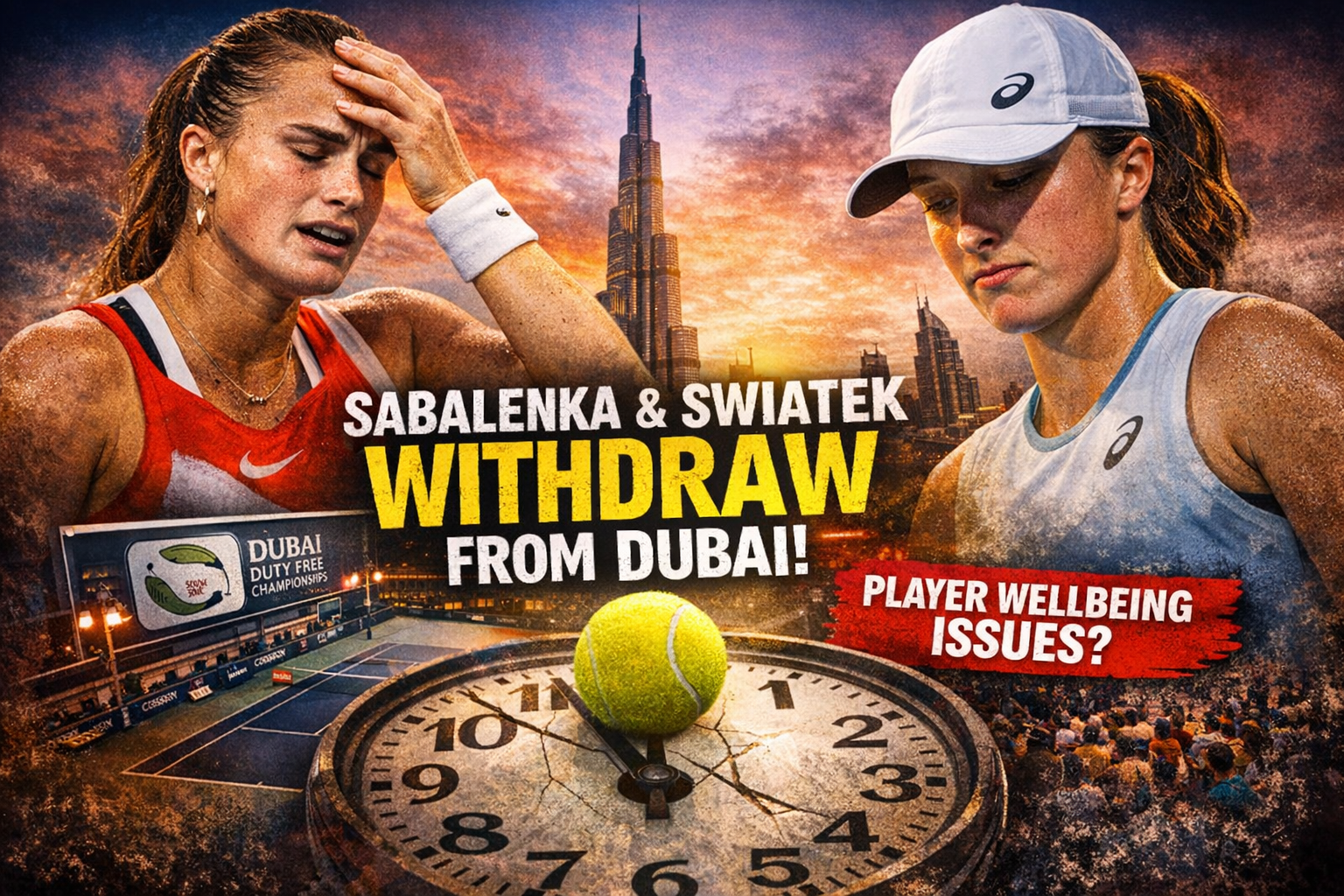
Top two players Aryna Sabalenka and Iga Swiatek have officially withdrawn from the Dubai Duty Free Tennis Championships, and the sport’s calendar just got another public headache.
Their joint pullout for the WTA 1000 event has been framed by both players as part scheduling decision and part health management, with each athlete signalling a willingness to accept penalties rather than overplay and risk injury or stagnation.
High-profile withdrawals, same message

The Dubai tournament confirmed both players pulled out on the Friday before the event, which was due to start on Sunday, February 15, and the rest of the world’s top-10 were still scheduled to compete even after those absences were announced.
Under existing WTA rules top players are required to enter 4 Grand Slams, 10 WTA 1000 tournaments and at least 6 WTA 500 events, and penalties for missing mandatory events can include ranking point deductions or fines.
Aryna Sabalenka has not competed since she lost the Australian Open final to Elena Rybakina, and the Belarusian said through organisers that she was “not feeling 100 per cent” after skipping the Qatar Open earlier in the Middle East swing.
Iga Swiatek did play in Doha and was beaten by Maria Sakkari in the quarterfinals, but the world number two said the withdrawal was “due to a change of schedule” and confirmed her next event would be Indian Wells in March.
“But it’s tricky to do that. You cannot skip 1000 events. It’s really tricky, and I think that’s insane what they do.”
Aryna Sabalenka
Sabalenka has been vocal about the congestion of the season and labelled parts of the timetable “insane” when speaking in January, a line that crystallises why top players are openly weighing fines against time to recover and train.
What the withdrawals mean on tour
ClutchPoints reported the Dubai event had a total prize purse of $4,088,211 and that the entry list still included 16 of the world’s top 20 and 33 of the top 40, underlining that the field remains strong despite the headline absences.
Sabalenka has played Dubai for nine consecutive years and historically has not made it past the quarterfinal stage at the tournament, a context that does not lessen the impact of her withdrawal but helps explain her decision to protect her body for bigger objectives.
Swiatek has also said she will skip some WTA 1000 events this season to work on technical changes that she could not address in the short off-season, an approach she explicitly acknowledged as a shift from previous years.
Tournament reaction and the calendar debate
The Dubai organisers issued a courteous statement expressing regret and wishing both players well while noting their significant followings in the city, and they said they hoped to welcome them back next year to reclaim the fan spectacle.
For the WTA, the situation is another test of policy and optics: balancing contractual commitments and a full event slate against the physical limits and long-term careers of marquee players, which the athletes have been increasingly vocal about.
On tour, players such as Maria Sakkari have publicly joked about tight turnarounds during the Middle East swing, but behind the humor lies a serious scheduling squeeze that forces choices between short term points and long term improvement.
The withdrawals also create ranking implications, with Sabalenka still leading the standings with the points she carries this season and Swiatek mindful of defending and climbing positions in the months ahead as Indian Wells approaches.
Ultimately the public exits by the world’s top two players feel deliberate: they are a signal from elite athletes willing to risk fines to reclaim training time and recover, and they amplify the debate about how the WTA structures mandatory events.
The tour will proceed in Dubai without them and the draw will give other stars a chance to take headlines in their absence, but the withdrawals are likely to reverberate through the season as players and organisers negotiate how tough the calendar should really be.
Join the conversation on Facebook.

Christoph Friedrich is a German tennis player and coach currently residing in Oakland, California. He began his tennis journey at the age of eight and has since dedicated his life to the sport. After working as a tennis coach and hitting partner in New York City for eight years, Christoph decided to share his knowledge and experience with tennis players around the world by creating the My Tennis Expert blog. His goal is to make tennis education accessible to everyone and help players select the best equipment for their game, from racquets and strings to shoes and overgrips. Christoph's extensive research and expertise in tennis technology make him a valuable resource for players of all levels.