It was the kind of pro tennis mismatch that leaves fans squinting and tournament directors reaching for their phones.
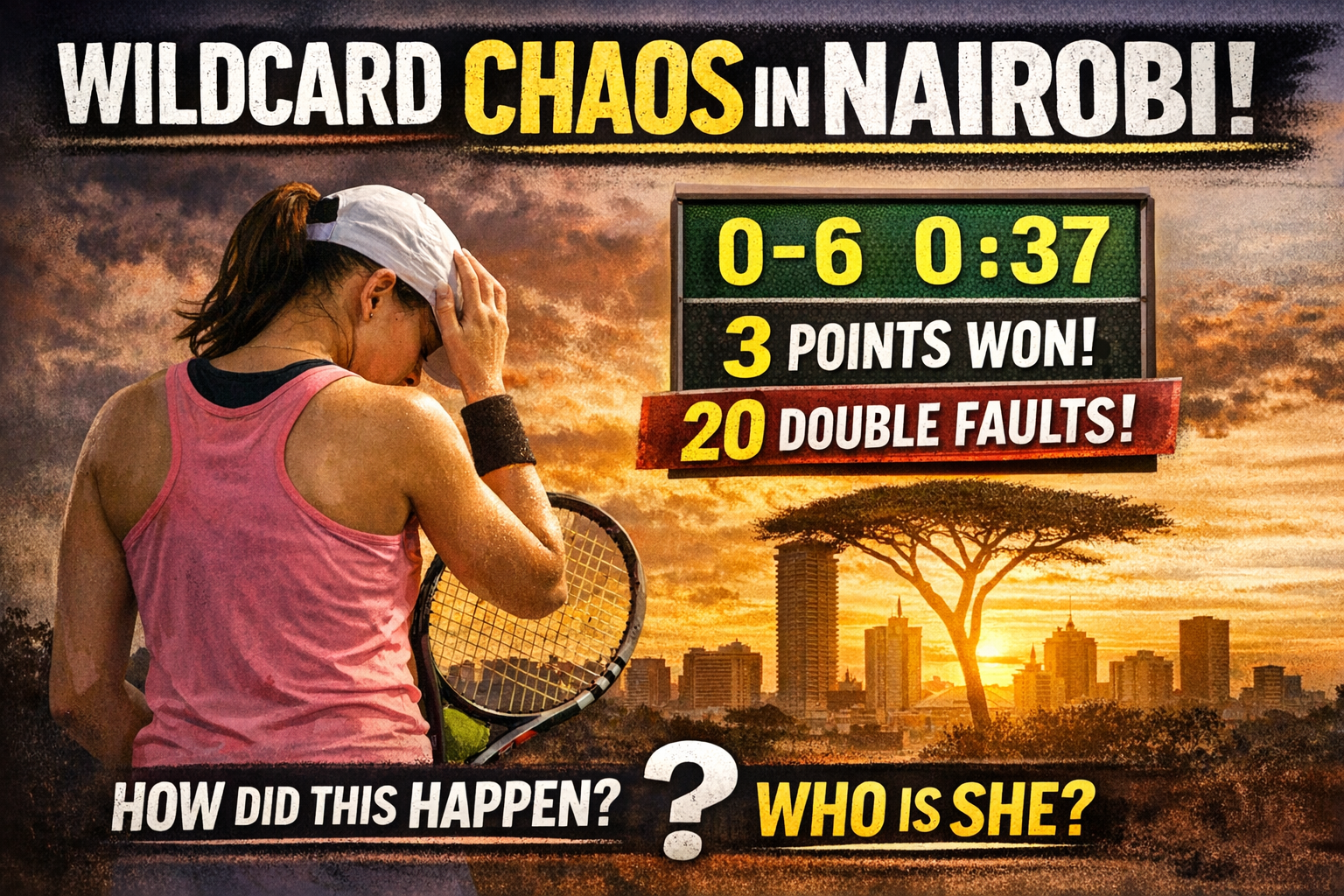
Hajar Abdelkader, a 21-year-old wildcard entrant in an ITF W35 event in Nairobi, lasted 37 minutes in a 6-0, 6-0 defeat, won just three points and committed 20 double faults while the clip of the match went viral.
What happened on court
The scoreline read 6-0, 6-0 to Germany’s Lorena Schaedel, a player listed around world No 1026, and the match clock stopped at 37 minutes as Abdelkader collected just three points in total.

shall, directly or indirectly, offer, pay or accept money, benefit or Consideration for the provision of a wildcard to an Event
Tennis Anti-Corruption Program (Section D.1.k)
Video from the match shows repeated serving problems, odd ball tosses and returns that rarely left Abdelkader’s side of the court, with two of the three points coming from Schaedel double faults and the other from an unforced error.
Statistics from the event underline the gulf: the Daily Mail reported a measly first serve percentage of 8.3 per cent for Abdelkader and documented the full 20 double faults that punctuated her appearance on the clay in humid Nairobi conditions.
How did she get a wildcard?
Questions immediately flowed about how a player with no prior tour-level matches ended up in the main draw, because a W35 event still carries financial and ranking incentives that matter to competitors and the sport.
Reports vary on the money involved: Daily Mail noted there was £22,000 (about $25,000) available to the tournament winner, while coverage in other outlets described a typical W35 event as offering total prize money of $30,000.
Wildcards are supposed to be discretionary slots for promising local or regional players who merit exposure, not open doors for anyone who signs up, and the ITIA rules spelled out in Section D.1.k make clear that trading wildcards for cash or benefits is explicitly forbidden.
Why this matters beyond embarrassment
There is a reputation cost for tournaments that allow extreme mismatches, and an integrity angle too because lower-tier matches feed data into betting markets; unusual results can create odd patterns that attract scrutiny from regulators and punters alike.
The Telegraph explained that local organisers ultimately control entries at this level and that in some regions there are fewer applicants, which can leave space for less experienced players to take a spot when draws are thin.
Online reaction was immediate, with viewers calling it one of the most one-sided contests in professional tennis history and social feeds labelling the performance as among the worst seen at tour level, while others urged restraint and context for a player making her debut.
Schaedel, who faced an opponent often unsure where to stand on serve, conceded just three points, one of which arrived when Abdelkader’s return landed and Schaedel overhit a forehand, according to match footage and contemporary reports.
Both the Daily Mail and Telegraph said they contacted tournament organisers and governing bodies for comment; Daily Mail Sport reached out to the Nairobi W35 director while Telegraph Sport queried the ITF about the circumstances of the entry list.
For tournaments, the case is a reminder that basic vetting and local development pathways need attention, and for fans it is a cautionary slice of reality television from a sport that usually prizes precision and polish over spectacle.
My Tennis Expert will be watching how the ITF and regional organisers respond, because wildcards should lift careers and not become social media punchlines, and because the sport loses credibility when the gap between competitors looks like two different worlds.
Join the conversation on Facebook.

Christoph Friedrich is a German tennis player and coach currently residing in Oakland, California. He began his tennis journey at the age of eight and has since dedicated his life to the sport. After working as a tennis coach and hitting partner in New York City for eight years, Christoph decided to share his knowledge and experience with tennis players around the world by creating the My Tennis Expert blog. His goal is to make tennis education accessible to everyone and help players select the best equipment for their game, from racquets and strings to shoes and overgrips. Christoph's extensive research and expertise in tennis technology make him a valuable resource for players of all levels.